When the Heart Speaks Louder Than the Habit
It’s a moment you never forget. The monitor beeping, the doctor’s words landing with quiet precision, the sudden realisation that life as you knew it has changed. For many people, that heart attack or cardiac arrest is the wake-up call — “I have to stop smoking.”
Listen here and read on to find out more ….
But what happens when you try and you can’t? Or when you do quit, only to light another cigarette months later, even though you promised yourself you were quitting smoking for once and for all?
You’re not weak. You’re human. And that voice in your head saying “I can’t do this, I won’t cope without nicotine” – that’s not your true self. That’s your limbic system talking – the ancient survival part of your brain that’s just trying to protect you.
The Psychology of Addiction – It’s Not Weakness, It’s Wiring
Smoking isn’t simply a bad habit. It’s a complex neurological pattern reinforced by your brain’s reward system. Every time you smoke, nicotine floods your brain, releasing dopamine – the chemical linked to pleasure, calm, and focus.
Over time, this process strengthens synaptic pathways in your brain. Synapses are tiny gaps between neurons that transmit signals, and each time a behaviour is repeated – like lighting a cigarette when stressed – the pathway becomes stronger and faster. Eventually, the brain begins to anticipate relief from nicotine before it even happens, creating a cycle that feels automatic, almost unavoidable.
The fear you feel in these moments, the restlessness, the craving, the mental chatter, isn’t a sign that you’re broken. It’s your limbic system doing its job: protecting you from perceived danger. The problem is, it’s confused. It still believes that nicotine equals safety, even though your heart is telling you otherwise.
The Limbic Lie – “I’ll Die Without It”
Allen Carr’s approach to quitting smoking was revolutionary because he didn’t focus on willpower – he focused on belief and perception. His central idea is simple yet powerful: we don’t keep smoking because we love it. We keep smoking because we’re afraid of life without it.
Your limbic brain whispers:
- “I won’t be myself without cigarettes.”
- “I’ll never relax again.”
- “I can’t cope with stress.”
- “I need this to survive.”
These aren’t truths. They’re limbic lies — fear-based thoughts built from years of emotional conditioning and strengthened by repetitive neural firing.
Here’s the neuroscience: each time you give in to a craving, the synaptic connections for the smoking pathway are reinforced. The brain literally becomes better at recalling the habit. That’s why it’s so difficult to quit permanently. Your inner dialogue has been wired for survival through nicotine.
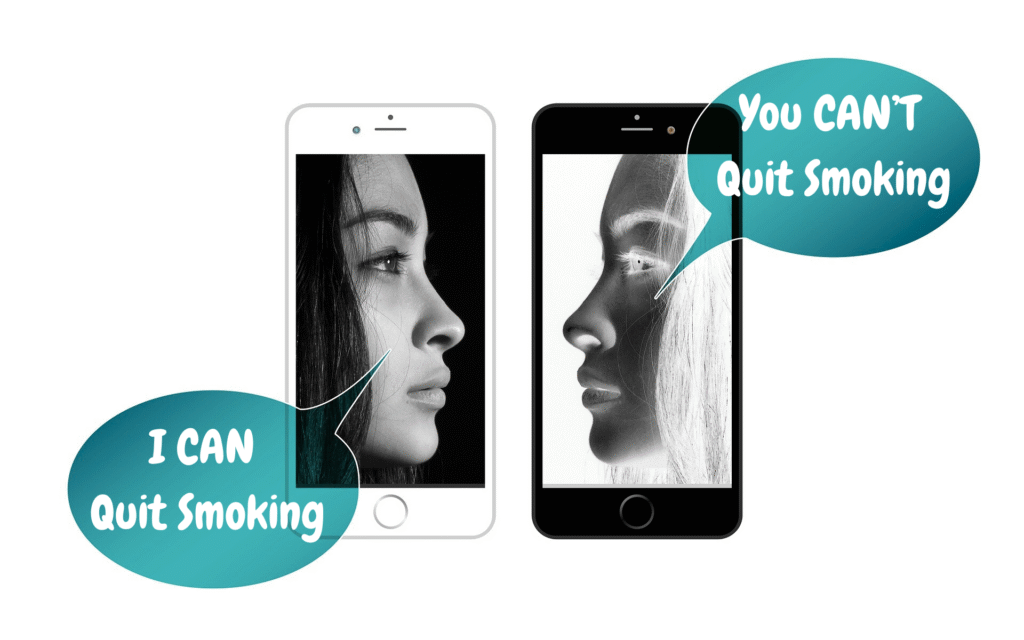
Rewiring Synapses and Rewriting Inner Dialogue
Here’s the empowering truth: your brain is plastic. Neuroplasticity means your neural pathways can be rewired. Just as the smoking pathway was strengthened over years, new pathways can be built linking calm, pleasure, and comfort to healthier actions like breathing, movement, or mindful awareness.
When you notice your inner voice saying:
“I can’t handle this stress without a cigarette”
…you’re seeing the synapse in action. That thought triggers the limbic system and prepares your body for craving. Instead of surrendering, try this approach:
- Pause and acknowledge the thought – don’t fight it; name it.
- Introduce a new behaviour – take a slow breath, sip water, or stretch.
- Label the habit as learned, not essential – remind your brain: “This craving is a remnant of old wiring, not a reflection of reality.”
With repetition, new synapses strengthen these healthier responses, and your inner dialogue begins to shift. Slowly, the fear voice loses authority.
The Freedom Mindset
Quitting isn’t about losing something – it’s about reclaiming your freedom. When you start to see smoking as an outdated coping mechanism rather than a reward, the craving loses its grip.
Reframe your thinking:
“I’m not giving something up. I’m gaining calm, health, and clarity.”
Every time your limbic system panics – “I need nicotine to survive!” – remind yourself:
“Today I am learning new pathways. I am safe. I can cope without cigarettes.”
This isn’t just motivational talk – it’s neuroscience in action. By consciously redirecting your inner dialogue, you are retraining your brain and rewiring the synapses that previously reinforced addiction.
Relapse Isn’t Failure – It’s Insight
If you’ve tried to quit before and returned to smoking, don’t judge yourself. Relapse isn’t failure. It’s data — evidence of where the old pathways are strongest and where your brain still needs reinforcement.
Next time a craving hits, observe it:
- What triggered it?
- What emotions or situations were present?
- What healthier action could replace the smoking response?
Each insight strengthens new neural pathways, gradually reducing the hold of the old ones.
You Are More Than the Habit
When you are quitting smoking after a heart event, you’re not just breaking a habit, you’re reclaiming authority over your body and mind. Every time you respond differently to a craving, your brain rewires, your synapses adjust, and your inner dialogue shifts toward truth rather than fear.
Your heart – physically and emotionally – deserves this freedom. You can retrain your mind to link calm, comfort, and pleasure to life itself, rather than a cigarette. The voice that once said “You can’t” becomes a whisper, while your true self – resilient, courageous, and capable – rises louder and clearer.
Smoking Hearts: This group is dedicated to supporting those who are quitting smoking, especially after a heart event.
Quitting smoking is one of the best things you can do for your heart health, and this group provides a supportive environment to help you succeed.

How to Get Ready to Quit Smoking for the Last Time: When was the last time you felt really confident and determined about your decision to quit smoking or vaping?
It wasn’t long ago I was trying to figure out myself. I could have freedom and feel good about myself. That’s why I put together this FREE guide to help you prepare.
Hypnosis to Manage Cravings: Quitting is not easy and remaining smoke free can be even more difficult.
Using this hypnosis recording will help reduce and minimise any cravings you may have and remind you why you quit smoking in the first place.