
If you are reading this article there is a good chance you are or someone you care about is waiting for heart surgery – whether that’s bypass surgery, valve repair or replacement, a stent, an implantable device, or another cardiac procedure, I want you to know something straight away.
- You are not weak for feeling frightened.
- You are not dramatic for feeling overwhelmed.
- And you are absolutely not alone.
The weeks before heart surgery can feel daunting. It can be so easy to let negative thoughts creep in … and once they’re in, they can spiral. As humans, we are wired to fear the unknown. When something involves your heart, the very thing that keeps you alive, that fear can feel magnified.
But today, I will gently walk you through this.
Listen here and read on for more ...
Before I begin, I can’t emphasise this enough. Please do not undertake any changes to your physical activity, fluid intake or nutrition without seeking advice from your cardiology team. What I include today are merely suggestions. Please remember that each of us is unique, and our heart conditions are specific to our bodies only.
So now we are good to go, we’re going to talk about how to prepare physically, mentally, and practically for heart surgery – before, during, and after – so that instead of feeling powerless, you feel prepared. And preparation changes everything.
The Waiting Period – Using Time Wisely
Since the pandemic, many of you have experienced long waiting times for surgery. Appointments get postponed. Dates get cancelled. You gear yourself up emotionally… and then you’re told to wait again.
That emotional rollercoaster is exhausting. If you are in that waiting space right now, I want to reframe something for you. This is not “dead time.”
This is preparation time. This is the time where you can actively influence your recovery. You might not control the surgery date, but you absolutely can influence how you enter that operating theatre.
Preparing Your Body for Recovery
You may not realise it, but what you do before surgery can significantly impact how well and how quickly you recover afterwards. This is empowerment in action.
Stop Smoking – Now
If you smoke, please hear this with compassion, not judgment.
Quitting now, even if your surgery is only weeks away, reduces your risk of post-operative complications, including pneumonia. It improves oxygen delivery. It supports wound healing. It helps lower cholesterol. And it genuinely speeds recovery. Your lungs and your heart will thank you.
And if you need support to quit, ask for it. There are services, medications, nicotine replacements and therapy, you do not have to do it alone.
Reduce Alcohol
Your liver plays a huge role in blood clotting and medication processing. Reducing alcohol intake improves liver function and supports healthy coagulation, which is critical in heart surgery.
Ideally, stopping altogether is best in the lead-up. But if that Friday night glass of red wine is your ritual, speak to your doctor and be sensible.
This is not about perfection. It’s about optimisation.
Move Your Body – Within Your Limits
If your consultant has not restricted you, gentle movement is powerful medicine. With approval from your cardiac team, try the following: Walking outdoors. swimming. Light yoga. Cardiac rehab exercises. Prehabilitation sessions. Breathing exercises.
Movement improves circulation, strengthens muscles, supports lung function, and reduces stress hormones. And don’t underestimate this: exercise is one of the most effective natural anxiety regulators. You are not training for a marathon. You are preparing your body to heal.
Nourish Yourself
Recovery requires building blocks. Protein supports tissue repair. Fruits and vegetables support immunity. Oily fish support heart health. Whole grains support energy levels.
Aim for:
- Lean protein (chicken, turkey, eggs, beans, fish)
- Five portions of fruit and veg daily
- Whole grains
- Healthy fats
- Adequate hydration (only as much as recommended by your cardiac team)
And yes… a small piece of chocolate is absolutely allowed. We are humans, not robots.
Take Your Medication
This one is non-negotiable. If your doctor has prescribed medication before surgery, it is there to reduce your risk of a cardiac event and manage symptoms. Do not stop taking medication unless explicitly told to. Stopping medication suddenly can increase risk and delay recovery.

Preparing Mentally for Cardiac Surgery
Now let’s talk about the part no one prepares you for properly. The mind. Putting your life in someone else’s hands. Signing consent forms. Hearing all the possible complications. Knowing you will be unconscious while surgeons operate on your heart.
It is terrifying. And it is also normal. Anxiety may show up as racing thoughts.
- Or irritability.
- Or numbness.
- Or denial.
- Or tears.
- Or complete emotional shutdown.
There is no “right” way to feel. But there are healthy ways to cope.
Talk to Your Medical Team
Your cardiologist and surgical team are your first line of reassurance. Write your questions down. Don’t rely on your memory when you’re anxious. Questions like:
- Why do I need this operation?
- What exactly will happen during the procedure?
- What are the risks?
- How much discomfort should I expect?
- How long will I be in the hospital?
- What happens the night before?
- What medication will I take?
- When can I drive, work, and exercise again?
There are no silly questions. These professionals have heard every fear imaginable. Speak it out loud. When fear is spoken, it loses some of its power.
Lean Into Support
This can feel like the loneliest time. Friends and family try to be supportive, but they don’t truly understand what it feels like to have your chest opened … or your heart stopped … or a device implanted.
This is why peer support matters so much. Talking to others who have walked this path can normalise your experience and reduce catastrophic thinking.
Let your loved ones know how you feel. Tell them what support you will need afterwards. People often want to help but don’t know how. Give them direction.
Manage Stress Intentionally
Stress is not just emotional. It’s physiological. It raises blood pressure. It increases inflammation. It taxes the heart. So, managing stress is not a luxury. It is a medical strategy. Let’s talk about practical tools.
Tools to Calm Your Mind Before Surgery
1. Journaling
I talk about journaling very often because it works. It is particularly good in this situation. Catastrophic thinking thrives in silence. It weakens when examined, and this is where journaling helps.
Write down your fears. Write down your “what ifs.” Then respond to them logically. For example:
“What if I don’t wake up?” Then counter it with questions such as:
“What are the statistics? How experienced is my surgeon? How many of these procedures are done daily?”
2. Do More of What You Love
Within your health limits, do things that remind you who you are outside of being a patient. Joy is not irresponsible before surgery. It is protective.
Sing loudly in the car. Walk in nature. Spend time with animals. Cook. Read. Build a jigsaw. Garden. Listen to music. Have a Reiki session. Create/Make something.
3. Get Organised
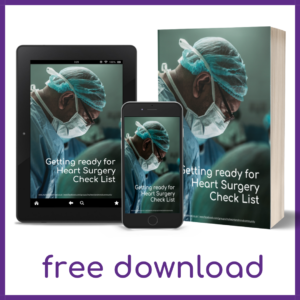
You can download my FREE printable checklist for the practical side of getting ready today. It will help you stay on track and feel in control.
4. Focused Distraction
Activities like Lego, puzzles, cleaning, organising, they require cognitive focus. They shift your attention from future fear to the present task. And yes… your house may never look cleaner than in the weeks before heart surgery!
5. Music & Podcasts
Music changes physiology. It slows your heart rate. It shifts your mood. Create a playlist that makes you feel strong, calm, or uplifted. And maybe save a few podcasts for in hospital listening.
6. Meditation & Breathing
Meditation improves sleep, reduces cortisol, and enhances emotional regulation. Even five minutes of slow breathing: Inhale for four. Exhale for six. Repeat. Longer exhalations signal safety to the nervous system. You are not trying to eliminate fear. You are teaching your body that it is safe in this moment.
Click here to download my free 20-minute guided meditation, How to Feel Good Now!
The Night Before Surgery
Let’s talk honestly. The night before can feel overwhelming. Thoughts are louder at night. Hospitals feel clinical. You may be fasting. This is where mindset shifts help. Make sure you have plenty of distractions with you and remember, the care team is there for you, so tell them how you are feeling or what is on your mind. You won’t be the first person or the last who is scared and anxious. They will take very good care of you.
Instead of thinking: “Tomorrow something terrible is happening.”
Try: “Tomorrow I am moving toward healing.”
This surgery is not punishment. It is an intervention. It is a repair. It is possibility. It is hope. Prepare practically:
- Follow fasting instructions exactly.
- Have your medication list ready.
- Have next-of-kin details accessible.
- Leave valuables at home.
- And breathe.
- Take one step at a time.

What to Take to the Hospital
You do not need five pairs of shoes. Just saying!!! Comfort and simplicity are key. Hospitals can be noisy and warm. Small comforts matter.
- Comfortable pyjamas
- Slippers
- Loose, front-opening clothing
- Toiletries
- Face and body wipes
- Eye mask and earplugs
- Books or downloaded films
- Phone (for essential contact and headphones)
Here are some additional helpful suggestions from my community:
- Hand fan
- Compression pillow (brilliant for coughing or laughing)
- Favourite squash or juice
- Small microwavable heat pad (if permitted)
Consider a Digital Detox
Social media can increase anxiety. Hospital time is healing time. You do not need Google horror stories. You do not need breaking news alerts. You need rest and positive focus.
Preparing Your Home for Recovery
Now let’s talk about your future self. When you return home, you will be tired. Possibly very uncomfortable and sore. Possibly foggy. Emotionally vulnerable. Get organised and make life easy for that version of you. Overreaching can strain healing wounds. Think efficiency.
- Clean bedding on the bed.
- Essentials within reach.
- Remote, glasses, charger nearby.
- Consider sleeping downstairs if stairs are difficult.
- Batch cook meals or arrange help.
- Organise pet care.
- Move plates and essentials to waist height.
- Set medication reminders on your phone.
Accepting Help
This one can be hard. Are you like me? I am used to being very independent and find it hard to ask and accept help. But recovery is not the time to prove that kind of strength.
True strength is allowing support from people who care about you and want to help you recover well and easily. Bear in mind that you may need help with:
- Cooking
- Cleaning
- Dressing
- Showering
- School runs
- Errands
Let people show up for you. It is temporary. And it is okay.
After Surgery – The Emotional Reality
Let’s briefly acknowledge something important. After surgery, you may not feel instant gratitude and positivity. You may feel:
- Emotional
- Tearful
- Flat
- Irritable
- Grateful but overwhelmed
- Relieved but scared
Anaesthetics affect mood. Pain medication affects mood. Trauma affects mood. Your body has been through something significant. Be gentle with yourself. Recovery is not linear.
The Mindset That Changes Recovery
Here is what I want you to hold onto. Preparation is not about eliminating fear. It is about building resilience. It is about entering surgery knowing:
- I have done what I can physically.
- I have asked my questions.
- I have prepared my home.
- I have informed my loved ones.
- I have tools to manage anxiety.
That sense of preparedness reduces helplessness. And helplessness is what fuels panic.
A Gentle Reframe
This surgery is happening for you, not to you. It is happening to extend your life. To improve the quality of life. To reduce risk. To create possibility. Yes, it is scary. Yes, it is major. Yes, it requires courage.
But you are stronger than you think. You have already survived the diagnosis. Appointments. Tests. Waiting. You can survive this.
My Final Thoughts
If you are in the waiting period right now, take this article as your practical guide. You can also download my FREE printable Getting Ready For Heart Surgery Check List.
- Prepare your body.
- Prepare your mind.
- Prepare your home.
- Speak your fears.
- Ask your questions.
- Accept help.
- Reduce stress.
- Focus on healing.
- One moment, one minute, one hour, one day at a time.
And remember… You are not just preparing for surgery. You are preparing for recovery. For strength. For life beyond this chapter. Take a breath with me now. Inhale… Exhale… You’ve got this.
If this article has helped you, please share it with someone else who may be waiting for heart surgery. Let’s reduce fear through information and compassion.
Where to Listen to Other Episodes
Click a button below ⬇️⬇️⬇️⬇️⬇️⬇️
 |
 |
 |
 |
 |
 |


