Do you ever read things on social media and wonder if it is true or not? I always find it worrying when it is connected to health and wellbeing. In this day and age with Artificial Intelligence, it is really hard to tell sometimes with images too. I have been fooled a few times. Well, today I am going to talk about something that may be fact or fiction. You may have read about or seen on social media and from time to time in the press. And so not to keep you in suspense, let’s get to it ….
Listen here and read on for more ...
Let’s Talk About a Curious Crease
Have you ever looked closely at your earlobe and noticed a diagonal crease running from one side to the other? You might’ve heard this referred to as Frank’s Sign or Frank’s Crease, and online claims range from “it’s a silent heart attack warning” to “it’s just ageing skin.”
Now, before we go any further, I would love to know how many of us actually have a Franks Crease. I definitely have it on both of my earlobes. I have popped a picture up in my Facebook group ‘My Heart & Mind Cardiac Community’. As I have shown you mine, why don’t you come over and join me and show me your ears with or without a crease?
What’s REALLY going on here? Does this crease mean trouble for your heart or is it just another internet myth that can fuel anxiety? Let’s unpack the science together in language that makes sense, especially if you’ve lived through a heart attack or heart surgery and are trying to separate fact from fear.
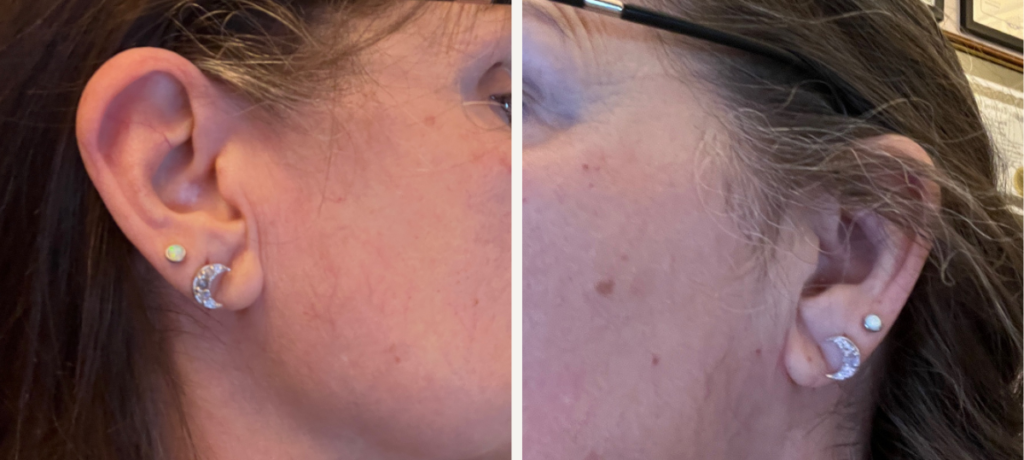
What Is Frank’s Crease
- Frank’s Crease (also called a diagonal earlobe crease or DELC) is a single diagonal line across the earlobe. It can show up on one or both ears.
- It was first described in 1973 by Dr Sanders Frank, who noticed it in patients with coronary artery disease.
Some people think it might offer a clue about cardiovascular health, but the scientific evidence is far from definitive.
What the Research Actually Shows
Some Studies Do Find a Link
A number of studies have reported that:
- People with a diagonal earlobe crease appear somewhat more likely to have coronary artery disease (CAD) or higher cardiovascular risk scores.
- Autopsy research observed more creases in people who died of cardiovascular causes compared with others.
These findings have helped keep Frank’s sign in scientific conversations but context matters a LOT.
But the Association Is Modest and Not Reliable as a Test
When researchers look closely at all the evidence together, including multiple studies with thousands of patients, the message becomes clearer:
- Diagonal earlobe creases don’t consistently identify who has or doesn’t have heart disease.
- Sensitivity and specificity are statistical ways to measure how good the sign is at detecting disease. They vary wildly and are generally too weak to be used alone for diagnosis.
- In real clinical practice, doctors don’t (and shouldn’t) diagnose heart disease based on an earlobe crease alone.
In one large study, even though people with bilateral creases were more likely to have obstructive coronary disease, the crease didn’t perform much better than traditional risk factors like smoking, diabetes, or high cholesterol.
So… Is It Fact or Fiction?
Here’s my honest summary:
✅ It’s real — the crease exists and has been formally described in medical literature.
⚠️ There is some association with heart disease in certain studies, especially in people who already have risk factors or symptoms.
❌ It is not a diagnostic tool — on its own, it doesn’t tell you if your heart is healthy or not.
❌ It’s not a cause of heart disease — it’s a potential marker, not a mechanism.
So calling Frank’s Crease a definitive sign of heart disease would be too strong a claim at this stage.
Why Does This Crease Even Appear?
Researchers don’t fully understand why the crease develops. Several theories exist:
- It may be linked to changes in small blood vessels or elastic tissue, similar to changes seen in early artery disease.
- It could relate to skin ageing, collagen changes, or other factors that aren’t necessarily related to heart disease.
At present, science hasn’t pinpointed a single “cause” and it likely involves more than one biological process.
If You Notice a Crease… What Should You Do?
First — no judgment, no panic. Your earlobe can have lines from many non-cardiac reasons (ageing skin, genetics, weight changes).
And I am guessing that, on the most part, anyone reading this today already has coronary artery disease in some form or other. I would love to know how many of us have this mark and how many don’t – I certainly have it on both ears and I have no clue if I had them before my heart attack.
But if you don’t have heart disease here’s a practical approach:
- Think about overall risk, not just the crease
Ask:
- Do you have high blood pressure?
- Diabetes?
- Family history of heart disease?
- High cholesterol?
- Smoking history?
Those are proven risk factors that matter far more than an earlobe crease.
- Consider this a prompt and not a prediction
If noticing the crease makes you think, “Hmm, I haven’t checked my heart health in a while…” then that’s a good thing. Use curiosity as motivation to update your health picture.
- Talk to your medical team
Your doctor can help interpret your cardiovascular risk using validated tools, not just a crease in your ear.
There are also some Cardiac Risk Calculators online, again – ALWAYS discuss outcomes with your doctor.
A cardiac risk calculator is a screening tool. You can use it to determine what your likely risk of future cardiovascular disease might be. It can help you take steps to reduce your risk.
Here’s one from the NHS (UK) nhs.uk/health-assessment-tools/calculate-your-heart-age and one from The Cleveland Clinic (US) my.clevelandclinic.org/health/articles/17085-heart-risk-factor-calculators
A Calming Cardiac Takeaway
Frank’s Crease isn’t a secret heart-attack alarm, and it isn’t magical, either. It might be a small clue that nudges some clinicians or researchers to think about cardiovascular risk more carefully, but by itself, it is not a reliable marker for diagnosing heart disease.
Your heart’s story is written in your whole health history. This includes your blood pressure, your lipid levels, your lifestyle, and your symptoms, not solely in the folds of your earlobe.
Your Heart, Your Story
If you have questions about your heart health (crease or no crease), the best first step is a conversation with the people who know you and your heart history. Use this information to feel informed and empowered, not anxious.
“You are loved more than you will ever know. You are admired by more people than you’d ever expect. You are worthy of joy and happiness. You are enough!”
If you would like to look into the research further, there are some links below.
- Is Hearing Loss and Ear Shape Tied To Heart Disease?
- Frank’s Sign and Cardiovascular Risk: An Observational Descriptive Study – ScienceDirect
- Relationship Between Frank’s Sign and Cardiovascular Disease: An Autopsy-Based Study – PubMed
- Diagonal Earlobe Crease (Frank’s Sign) for Diagnosis of Coronary Artery Disease: A Systematic Review of Diagnostic Test Accuracy Studies – PubMed
- Diagonal Earlobe Crease (Frank’s Sign) for Diagnosis of Coronary Artery Disease: A Systematic Review of Diagnostic Test Accuracy Studies – PMC
- The relationship of diagonal earlobe crease (Frank’s sign) and obstructive coronary artery disease in patients undergoing coronary angiography – PubMed
Where to Listen to Other Episodes
Click a button below ⬇️⬇️⬇️⬇️⬇️⬇️
 |
 |
 |
 |
 |
 |