
“I don’t remember much of my time in intensive care.”
It’s something I hear often from people recovering from heart surgery, a cardiac arrest, or another major cardiac event.
Some people remember flashes of images. Others remember strange dreams, vivid nightmares, or snippets of conversations that may or may not have happened. Many remember nothing at all.
And yet, those lost hours and days can continue to affect you long after you’ve returned home.
If you’ve ever found yourself wondering:
- What happened while I was unconscious?
- Who visited me?
- What were those frightening dreams about?
- Why do I feel unsettled when I can’t remember?
You’re not alone.
One simple tool that is helping patients and families make sense of these missing pieces is something called an Intensive Care Unit (ICU) diary.
It might sound too simple to make a difference, but for many people it becomes one of the most meaningful parts of their recovery.
Let’s explore why.
Listen here and read on for more ...
When Your Body Recovers Faster Than Your Mind
After a major cardiac event, everyone expects the body to need time to heal. What many people don’t expect is how much healing the brain and nervous system may need too. During an ICU stay, patients are often exposed to:
- powerful medications
- sedation
- sleep disruption
- pain relief medication
- physical trauma from surgery
- emotional shock
- periods of confusion and disorientation
As a result, many people leave the hospital with little or no memory of what happened. Others remember experiences that feel completely real but were actually dreams, hallucinations, or misunderstandings created by a brain trying to make sense of an unfamiliar environment.
This can leave people feeling confused, anxious, frightened, or disconnected from their own story.
Sometimes these experiences contribute to symptoms associated with Post-Intensive Care Syndrome (PICS), which can include anxiety, low mood, sleep difficulties, intrusive memories, and challenges with concentration.
The body may be healing, but emotionally and mentally, things can still feel very unsettled.
What Is an ICU Diary?
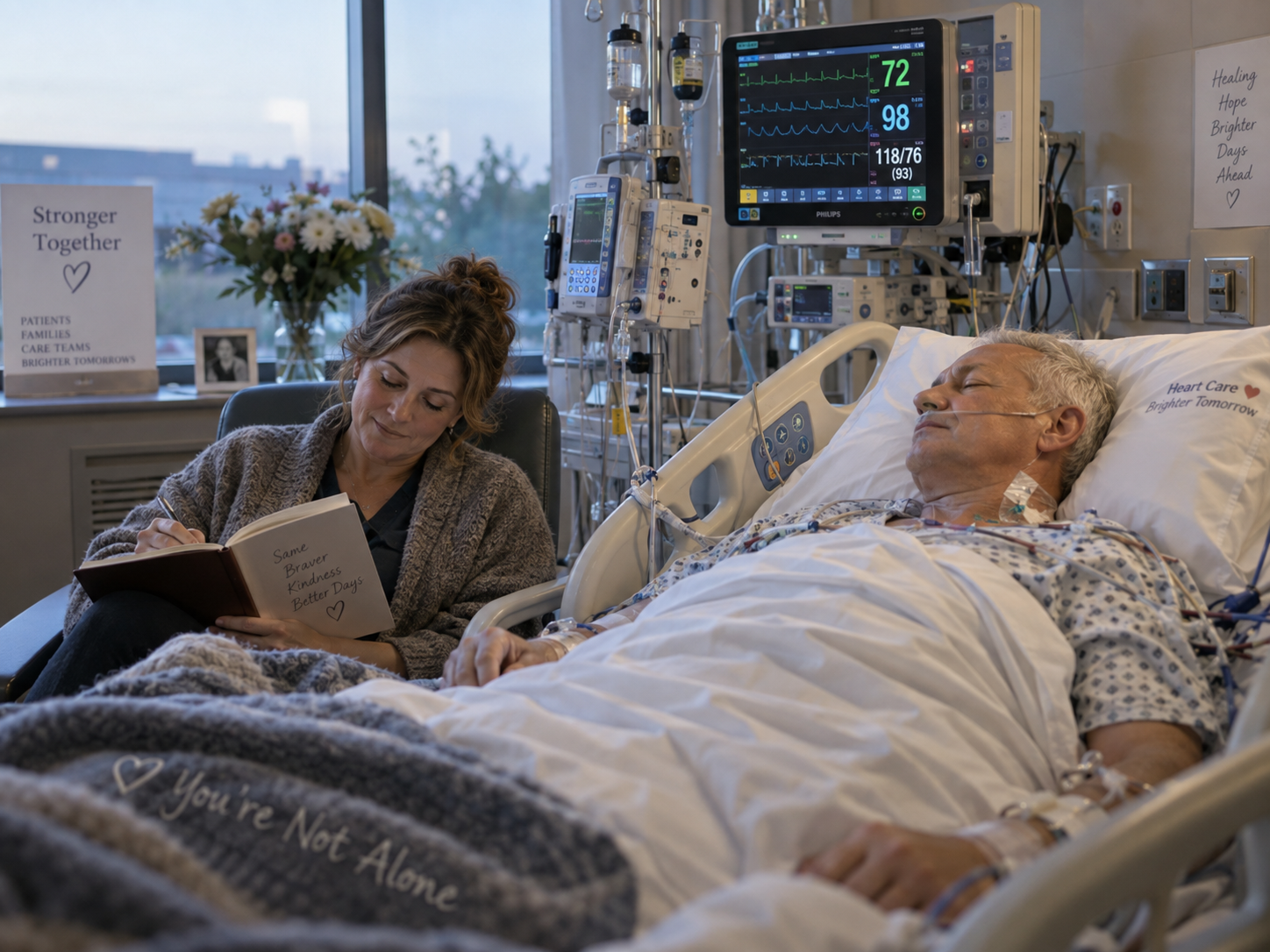
An ICU diary is exactly what it sounds like. It’s a diary kept during a patient’s stay in intensive care. Family members, close friends, and sometimes healthcare staff write short entries about what is happening each day.
Unlike medical notes, the diary is written in everyday language. Think of it as a conversation with the patient.
The diary might include:
- daily updates
- messages of love and encouragement
- photographs
- descriptions of important milestones
- family visits
- stories from home
- thoughts and feelings from loved ones
It isn’t about recording blood pressure readings or medical terminology. It’s about recording the human side of the experience. The parts that matter. The parts that help tell the story.
Why Missing Memories Can Feel So Distressing
Human beings are natural storytellers. Our brains like things to make sense. When there are gaps in our memory, the brain often tries to fill those gaps. Unfortunately, it doesn’t always do that accurately. If you’ve ever woken from a vivid dream convinced it was real, you’ll understand how convincing the mind can be. After intensive care, some people are left with frightening fragments of memory:
- strange voices
- feelings of being trapped
- vivid nightmares
- confusing images
- sensations that seem impossible to explain
Without context, these experiences can become distressing.
People often tell me:
“I know it sounds silly, but I still wonder if that really happened.”
It doesn’t sound silly at all.
Your brain is trying to make sense of an experience it couldn’t fully process at the time. An ICU diary helps provide the missing context. It gently fills in the blanks with reality.

How an ICU Diary Supports Emotional Healing
It Helps Fill Memory Gaps
One of the biggest benefits of an ICU diary is that it provides a timeline of what actually happened. Patients can read about:
- when they first opened their eyes
- when a breathing tube was removed
- when family members visited
- the progress they made day by day
These details help create a more complete picture of the experience.
It Helps Separate Reality from Dreams
Many people experience vivid dreams or hallucinations while critically ill. Reading a diary can help patients understand which memories were real and which were part of the brain’s response to illness, medication, or sedation. That understanding alone can be incredibly reassuring.
It Can Reduce Anxiety
When we don’t understand something, our minds often assume the worst.
A diary provides clarity. Instead of wondering what happened, patients can see the facts presented in a gentle, compassionate way.
It Restores a Sense of Connection
Perhaps one of the most powerful aspects of an ICU diary is hearing the voices of loved ones. Reading messages written by family members can remind patients that they were never alone.
- Even when they were unconscious.
- Even when they couldn’t respond.
- Even when they don’t remember.
- Love was still there.
The Unexpected Benefit for Families
ICU diaries aren’t only helpful for patients. They’re often healing for loved ones too. Watching someone you love undergo heart surgery or survive a cardiac arrest can be deeply traumatic. Family members frequently experience:
- fear
- helplessness
- uncertainty
- exhaustion
- anxiety
Writing in a diary provides an outlet for those emotions. It allows loved ones to feel involved. To contribute. To communicate. To process what is happening.
Many families later say that keeping the diary helped them cope during one of the most frightening periods of their lives.
When Your Mind Feels Foggy: Understanding “Pumphead” and Cognitive Recovery
Many people recovering from heart surgery describe feeling mentally different afterwards. You may notice:
- memory difficulties
- concentration problems
- slower thinking
- mental fatigue
- difficulty finding words
- feeling less sharp than usual
Some people refer to this as “brain fog.” Others may have heard the term “pumphead,” particularly after surgery involving a heart-lung bypass machine. Whatever term you use, these experiences can feel unsettling. Especially if you’ve always been someone who was organised, capable, independent, and mentally sharp. You may find yourself thinking:
“Will I ever feel like myself again?”
“Is something wrong with me?”
“Is this permanent?”
These concerns are extremely common. Your brain has been through an enormous amount. Major surgery affects far more than the heart. The nervous system, sleep patterns, hormone levels, stress response, and cognitive function can all be impacted. For many people, these symptoms gradually improve over time. Recovery isn’t always quick. It isn’t always linear. But improvement is often happening, even when it feels frustratingly slow.
Why ICU Diaries Can Help With Cognitive Fog
When memory feels unreliable, an ICU diary becomes something you can trust. It provides:
- a factual record
- reassurance
- structure
- continuity
- context
Instead of relying on fragmented memories, patients have a written account that helps organise the experience into a coherent story. And stories matter. Because healing isn’t just about repairing the heart. It’s about helping the mind understand what happened too.
What Should You Write in an ICU Diary?
The good news is that there are no complicated rules. Simple is often best. You might include:
Daily Updates “Today the physiotherapist helped you sit in the chair for the first time.”
Small Victories “You squeezed my hand when I spoke to you.”
Family News “The grandchildren made you a card today.”
Everyday Life “The dog is still sleeping in your favourite chair.”
Your Feelings “I was frightened today, but seeing your progress gave me hope.”
Messages of Love “We’re all rooting for you.” “We love you.” “We can’t wait to bring you home.”
Sometimes the simplest entries become the most treasured.
Including Photographs
Photographs can be incredibly valuable. They help patients understand what was happening when they were unable to form memories. Photos might include:
- family visits
- milestone moments
- cards and messages
- familiar faces
- life at home
Always check hospital policies first, as each unit may have different rules about photography.
When Should You Read Your ICU Diary?
This is one of the most common questions people ask. The answer is simple:
When you feel ready, there is no deadline. No timetable. No right or wrong approach. Some people read it shortly after returning home. Others wait weeks or months. Some read a few pages at a time. Others read it with a family member beside them. Trust yourself.
A Word of Warning
Reading your diary may bring up emotions. You might feel relief, gratitude, sadness, grief, confusion or comfort. Sometimes all of them in the same afternoon. This is normal. You are revisiting a life-changing experience.
If you feel overwhelmed, take a break and pause for a while. Talk to someone you trust. Take it a therapy session or discuss it with your healthcare team. You don’t have to process it alone.
The Diary Holds the Story Until You’re Ready
One of the things I love most about ICU diaries is that they don’t demand anything from you. They simply wait. They hold the story safely until you’re ready to reclaim it. Because recovery after a cardiac event isn’t only about healing wounds or rebuilding strength. It’s also about rebuilding understanding. Making sense of what happened. Finding your footing again and reconnecting with yourself.
An ICU diary cannot change what happened. But it can help you understand it. It can replace fear with clarity. Confusion with context. And missing time with something deeply human. A story told through love, kindness, and connection. And sometimes, that’s exactly what healing needs.
A Gentle Invitation
If you or someone you love is preparing for heart surgery, recovering from a cardiac arrest, or navigating life after an ICU stay, consider creating an ICU diary. You don’t need to be a writer. You don’t need perfect words. You don’t even need long entries. A few sentences a day can become a priceless gift, because your story matters. Even the parts you don’t remember. Especially the parts you don’t remember.
Download the ICU Diary
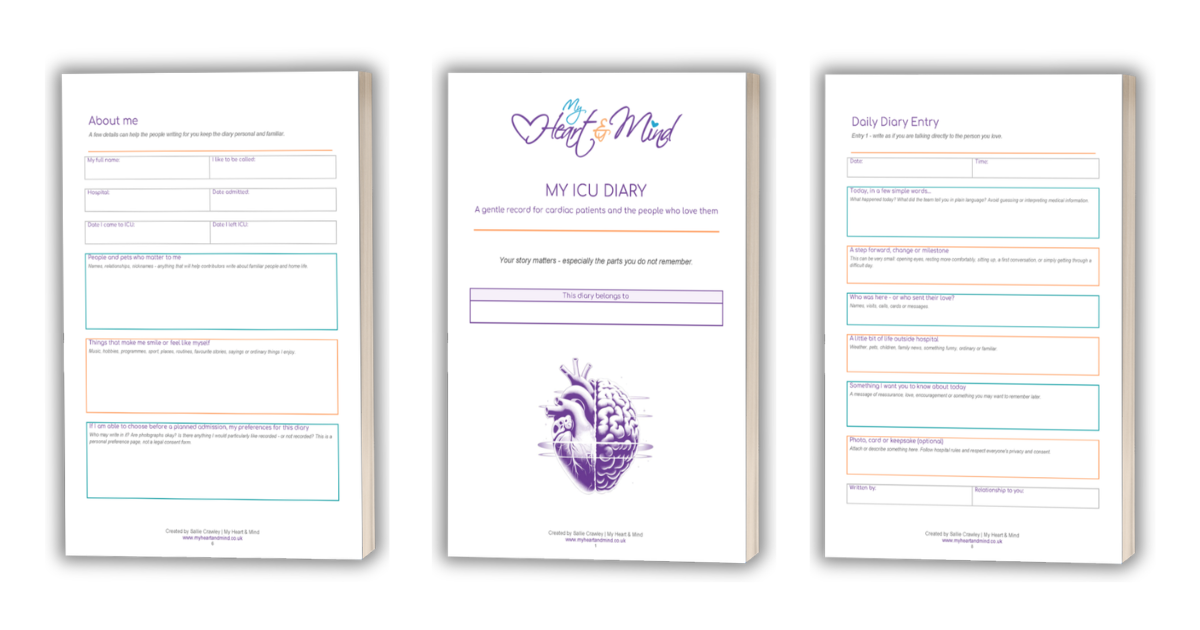
I’ve created a free, printable ICU diary designed specifically for cardiac patients and their families, with:
- clear instructions
- gentle prompts
- space for messages, milestones, and reflections
- guidance for patients reading it later
If this feels like something that could help you or someone you care about, you can download it below. You don’t have to remember everything to heal. Sometimes, having the story written for you is enough.
Where to Listen to Previous Episodes
Click a button below ⬇️⬇️⬇️⬇️⬇️⬇️
 |
 |
 |
 |
 |
 |