
Today I’m joined by filmmaker Andrew Pike, and we’re talking about something that many people experience after open-heart surgery, but far too many people are left to make sense of on their own.
It is often called pumphead, although as you’ll hear in this conversation, even that word doesn’t fully explain the emotional, psychological and cognitive impact that can happen after surgery.
Andrew had open-heart surgery in Sydney, and physically the surgery was a success. His prognosis was good, his heart had been helped, and from the outside it may have looked as though he should simply feel grateful and get on with life.
But that wasn’t how it felt.
When Andrew returned home, he began to feel disoriented, confused, unable to connect with people in the way he had before, and deeply unsettled by a sense that something was terribly wrong. And like so many people after a major heart event or heart surgery, he found that being told to “snap out of it” or “just be happy you’re alive” didn’t help. In fact, it made him feel even more alone.
In this interview, Andrew talks openly about the years it took to find the right psychological support, the importance of being properly listened to, and how making his film Pumphead became part of his own healing journey.
We also talk about trauma, earlier life-threatening illness, post-traumatic growth, patient stories, medical professionals, and why emotional support after open-heart surgery should not be an optional extra that people have to fight to find.
This is a thoughtful, honest and deeply important conversation about what happens when the body may be repaired, but the mind and emotions are still trying to catch up.
So listen gently, especially if this is your experience too.
Let’s begin.
Listen here and read on for more ...
Transcript of our conversation
Please note that this is a transcription that was created by AI. There will be grammatical errors and misheard words. I have included it as I know some people prefer to read rather than listen.
Andrew [00:01]
I had my open-heart surgery, in Sydney. I went up for it. I was getting incredible pain and I did have the sense that pain was going to kill me if the surgery didn’t happen. So when they said, they did some more tests when I got to Sydney and said, you’re going to have to have open-heart surgery, I said, I just said, well, please get on with it. You know, it didn’t scare me at all because I knew it was going to relieve me from pain. And I’d read about open-heart surgery and the statistics of success with the surgery are very, very high, so high rate of success.
So I had confidence they would do it. So I, had the surgery. I went, into intensive, care afterwards and after a week in the cardiac ward, went home back to Canberra. And it was only when I got back to Canberra, and probably a week after I got back, I began to feel something is just terribly wrong. I couldn’t think straight. I felt that I couldn’t engage with anyone properly in the way that I used to. And I felt, sort of completely disoriented. I’m not going to say depressed because I fight back against that word. I don’t think it was depression. I don’t think it ever has been.
But I think it’s disorienting, disorientation, that sort of feeling. And also there’s a fear of cataclysm always there and you know, and that takes a long time to go away, I think. and eventually we went back up to Sydney to see the cardiologist who oversaw the, surgery at St. Vincent’s Private Hospital. And I told him that things weren’t right. I just felt confused and befuddled and disoriented. And he said he just literally. And I wished I’d had a camera there at the time. He literally flapped his hand and said, it’s intimations of mortality. Don’t worry about it, you’ll get used to it. And sent us on our way.
And I had friends at home, who a number of them started based on what that cardiologist had said. They said, look, your prognosis is brilliant. They’ve said this surgery is going to see you out. You know, it’s going to last you 20 years or more. And so you just got to snap out of it. You’ve got to feel happy, get on with your life and feel happy. Feel grateful that you are alive. And if anything, those comments made me Go backwards into myself. Because I knew I didn’t feel that way at all. I couldn’t be happy. I couldn’t create a sort of happy face and happy conversation.
I felt that something was wrong and I couldn’t snap out of it at all. So it got worse. And relations I couldn’t. I began to find it difficult to interact with people around me. And we went back up to Sydney again to see the cardiologist. And I said this is all still going on. It’s feeling terribly stressful. Stressful, for everybody else around me. And he said, look, you’re in a physical state of well being. That you’re better situated now to endure a bit of stress than you ever have been. Which I thought that just puts it back on me. You know, it’s my failure. I’m failing.
And I found it all very difficult at one stage. I ran away from home and I went and hid in a hotel room where I thought no one could find me. Of course they could if they tried, but they didn’t try to search for me. And the 10 days I spent there were just incredibly peaceful. And I felt, It felt very good, but I knew it wasn’t sustainable.
Sallie [05:03]
That was a bit extreme actually, to hear you say that you ran away. It must have been such an intense feeling beforehand, not being heard.
Andrew [05:13]
Yeah. Anyway, a friend. I tried to explain what my problem was when I came back and a friend offered me the use of a little flat that she had in outside Canberra. And so I moved in there, in there for as long as I needed to. I ended up being there for about a year and there was a wonderful feeling of closing the door behind me and feeling a sense of relief that I’ve locked everything out. But then I’d turn around and look into this tiny space and I’d just feel incredibly claustrophobic.
Anyway, all these things are negatives and I don’t really want to harp on these, but I think that
Eventually things got quite bad. And I knew an old friend of mine had given up her career as an anthropologist and had retrained as a mature adult in psychological counselling. And I rang her saying, I think I’m in big trouble. Can you help me? And she said, no, I can’t because I’m a friend. I can’t help you professionally, but I will, give you the names of some. She told me I need to go to my general practitioner and get what the government provides, which is a mental health plan. I didn’t know such a thing existed. No one had mentioned that. None of my gps.
And I got my mental health plan and my friend had given me a list of psychologists she felt she would like, she would feel good about recommending to me. And the first one on the list said, yes, I’ve got a space on Tuesday morning at 9 o’, clock, can you make that? I said I’ll be there. And I ended up seeing this psychologist. I think we’ll have to call her Kay.
Sallie [07:25]
Okay.
Andrew [07:26]
I don’t think I can name her really because she always respected my privacy. So I think I have to do that in return for her. Yeah. So she called herself a Jungian psychologist, psychotherapist and she very rarely gave advice or direction. She was trying to get me all the time to self assess myself, self evaluate to be specific about what I was feeling. I used to characterise her, say she’s trying to get me to name the beast, you know, what it is that’s upsetting me.
But after the first session she did give one of her few bits of advice and she said, I think we need to meet twice a week for a while. And that just felt so good to me that she’d seen that I have a problem and there was no, she wasn’t trying to explain it away or push me to snap out of it or anything. She wanted to help. So I did go and see her twice a week for about nine months. And then she said, why don’t we try scaling back a little? Once, once a week for another three months and then maybe once, once a fortnight.
Anyway, I ended up being her, with her for five years and we ended up being once a month just to monitor. And it was a very good relationship. After about six months with her, I said to her, you’re a Jungian psychologist. We haven’t talked about dreams at all. When do we start doing anything Jungian? And she said, andrew had been doing it from the moment you walked in the door. I still don’t know what she meant by that, but I felt her approach was what I needed. She listened and she responded to what I said. Not, not according to a prearranged concept of how psychotherapy should work.
Her methodology, was to ask me questions all the time. If I said I was angry about something or sad about something, she’d be, I couldn’t get away with that. I had to say exactly how, what was what, what was my anger about, you know, and so on the Same with feeling sad or happy. She wanted to know, get me to evaluate the emotions.
Sallie [10:08]
She sounds very person-centred. It was all about you rather than any processes that she might have had which. That’s right.
Andrew [10:17]
So I just wish that everyone else who has problems of this nature after surgery could see someone like that who I don’t know. The way you work Sallie, and I’m sure you’re probably in the same camp as Kay but you know, because all your work that I’ve been able to see is all based on listening too.
Sallie [10:41]
Absolutely.
Andrew [10:42]
And empathy and I respect that and value that.
Sallie [10:48]
Thank you.
Andrew [10:49]
So I saw her for quite a long time and after a while I ran into a couple of old friends that I hadn’t seen for quite a few years. Man named Mike and his wife Susan. And they asked, they’d heard about the surgery and wanted to know about it. And I said a bit about. And I probably said too much and they said Andrew, you know, they knew the films I’d made beforehand. They said you should be putting this on film, you should be filming it. And that really triggered the idea of making a film.
It came from someone else, you know and I think it was a very healthy idea because it again made me think about applying all the things that were going on in my life into this work of creativity. So I think that brief conversation with them was incredibly purpose. It had a big effect.
Sallie [11:59]
They planted the seed.
Andrew [12:02]
Yes, that’s right, exactly. So I, as a few weeks went by and I began doing more research for the film online, looking at academic articles about the after effects of open-heart surgery that I could find online. There were a lot of them. People can just Google looking for them and there’s tonnes there but not all of them are easy to read
Sallie [12:30]
For non-professional, very scientific, aren’t they?
Andrew [12:35]
Yeah. But I found that quite a few of these online papers that I couldn’t really understand were coming out of Melbourne Australia from an organisation called the Australian Centre for Heart Health. And so I looked at their website, I looked at the personal profiles of the research psychologists there and I liked the look of the people, they were good photographs. So I spoke to my, my friend Mike about it who planted the seed about the film and said would you be willing to come down to Melbourne with me and we’ll go and see them? I feel I like to have someone with me.
So Mike just laughed and said of course. So he came down and we had a ball. We were there like for about Three hours, you know. And they just they were just intrigued that I was going through the emotional crisis that they had that they were researching. I was a great specimen. But they also were very impressed and excited by the idea that we were thinking, thinking of making a film. And so Mike and I went down a second time some weeks later with cameras and I was filming this myself at this stage. And I filmed an interview with a very good one with the main psychologist.
there a quite wonderful woman called Barbara Murphy, very Irish name and she has quite a sort of wild Irish look about her, hair and her. She’s in the film. She. Before we turned the camera on she was very hard hitting about her comments. You know, she said things that she told me she wouldn’t say on air, but they were actually reassuring things that propped me up and I won’t repeat them now but she was a forceful presence in the room to be dealing with. So I filmed the interview with her and she ended saying, andrew, you’re not alone in this because we are walking, we are walking with you.
And that just brought tears to my eyes. It’s in the film. I left it in the film. Very powerful phrase. And I’ve always felt great gratitude to her for everything she did to encourage me. So we did a lot of filming with them and then I began to look for. decided that the film would be structured not about my storey but about my journey to find out about Pumphead by talking with other pumphead people. So I met a lot one way or another. Word got out. There’s an American based one and the small British one that I think you’re involved with and there’s one in Australia.
So I went through those groups to try and find some people who might be interested in the film. and I found quite a few people came forward to me saying I’ve heard about the film, I would love to tell my storey in it if you’ll have me, if it’s appropriate. I would love to be in it. So they came forward to me and that’s very, very important. There’s no one in the film who I had to persuade to be in the film. I had to trick to be in the film or anything. They all came forward and that becomes very significant later when we talk about post-traumatic growth.
So I got my cast, as it were, together and we began with my camera crew this time began filming
Patient stories. And because the patients wanted to tell their stories it was great you know,
Sallie [16:43]
They didn’t need much encouragement.
Andrew [16:45]
Yes. It made me feel very strong that they were trusting me, that, you know, we were, equals and they were sharing their stuff with me. And we did record a long one with me telling my whole storey, but I didn’t want to use it because I’m really the host for the whole thing. And I just felt it wasn’t right for me to do it, other than sort of provide linking, narration. And, we did all of that and. And my, camera woman was superb. I’ve worked with camera people who, when they’re in the room, they’re the most important thing.
And they, you know, say, oh, you got to put that over there and that light’s not right. You’ve got to fix that and you’re going to do this, you know. And the last person that they pay attention to is the person we’re filming. But my camera woman who’s amazing, her name is Zhenshi Van Der Klooster. If anyone’s filming in Canberra, I really recommend her. But, once, we got the position for the camera on the tripod and the speaker in place, she just disappeared. You wouldn’t know she was there. You know, she let it all happen between the speaker, and with my prompting to the speaker. So wonderful professional Storey.
And the same with my editor. when he got the material, he just saw his way through it, you know, just beautifully. Great empathy on the part of those workers.
Sallie [18:28]
Sounds like they were passionate about the project themselves.
Andrew [18:31]
Yeah. So we decided to use, the three psychologists from the Australian Centre for Heart Health in the film also to sort of bridge the gaps between the different speakers. And they were all very supportive. So I had a, tremendous time making the film. And all the time my psychotherapist was saying, well, how did you feel about that filming you did on Saturday? I thought I went very well. In what way did it go well? You know, I couldn’t say anything without the.
Sallie [19:15]
I would imagine it was very cathartic for you as well.
Andrew [19:17]
Yes, it was. So I think it was. Played a big role in my. I don’t want to say recovery, but in my regaining of a sense of self and sense of purpose, sense of self confidence and so on. And, So I was very privileged to do that. Oh, yes, this is very important. It’s actually Barbara Murphy at one point, took me aside and said, andrew, I think I should tell you that our research has shown that people who have a major, problem with the pumphead Syndrome, for want of a better term, tend to have had an earlier trauma that causes the new trauma to be magnified. It’s a double whammy.
And I said, no, no, no, no, that’s not the case. I had never had another trauma in my life that. No, never. And she said, I think you should think about that, not dismiss the idea. So I raised this with my psychoanalyst and she said, I’ve been trying to talk with you about an earlier trauma for a long time and you keep evading the question. And all of a sudden I knew what it was and I couldn’t deal with it, I couldn’t speak about it. I got teary. I’m doing it now. Tears come to my eyes and it was a trauma.
I realised I was very happily chatting about the pumphead syndrome with all and sundry. but this earlier trauma I couldn’t verbalise at all. And eventually my psychoanalyst did bring it out. Was that about 20 years earlier? 20 years before I had the heart surgery. This, is very hard to do, but I want to do it.
Sallie [21:30]
Okay, take your time.
Andrew [21:32]
I had been filming in a, swampy area of Papua New Guinea, tropical swamps. And the area was infested with mosquitoes. you hold your arm up and mosquitoes would appear on your arm. So we’re taking anti malarial medicines and wearing clothes over every bit of our body and using mosquito nets at night and making sure no part of your body touched the mosquito net because they’d get you through. Anyway, anyway, it was for a film that ended up winning prizes and was very proud of the film. But and I knew when we’d completed our shoot in this swampy area of Papua New Guinea that we’d got gold.
And so we came back and about a week after I came back to Canberra, I went out to dinner one night with my wife and friends. And we’d been having a few drinks and dinner was running late. We were late for dinner. It was a late dinner and suddenly, the room started spinning around and I thought, oh God, I think I’ve had too much to drink on an empty stomach. And I said, but then I felt I can’t even sit, I’m going to fall, you know, collapse forward while I’m sitting.
So I got up and held myself up and got into the toilet thinking I might be getting sick or something. But it was the same there. I couldn’t, I had to prop myself against the walls. So I came back to the table and I said, something’s very wrong, you better get me to a hospital. And I remember nothing after that. So I don’t know, what happened. But I did wake up a long time later in hospital and they said I had malaria. So they treated me for that and I recovered and I came home. You know, that’s after 10 days or two weeks in hospital.
And I came home and I was feeling fine and then it all started again. So I went back to hospital and they said, oh, maybe we needed to treat you for longer but for the malaria. So, they did that and I came home, felt fine for a few days and then it was all happened again. So I went back to hospital and this time they, we’re not going to treat you until we’ve done a full blood test. So they did that and they said, yeah, well you haven’t got, the malaria, the common malaria that we were treating you for. You’ve got something far much more serious, which is cerebral malaria.
Sallie [24:30]
Goodness.
Andrew [24:31]
And that’s a different treatment. And the drugs, you have to be, I’m talking about it all right now. But anyway, I had to stay in hospital for quite a long time because the drugs were dangerous and I had to be monitored daily and so on. And the thing about cerebral malaria, it either kills you or it doesn’t, it doesn’t recur.
Sallie [24:55]
Right.
Andrew [24:57]
I was very lucky it didn’t recur.
Sallie [24:59]
But it that was a very traumatic experience for you, I can imagine.
Andrew [25:04]
Extremely traumatic. And it affected my liver and so I had to dramatically change my diet. I had to stop alcohol, I had to I actually went vegetarian for about four years, because I just found allergies to all sorts of things would cause problems.
So I had that earlier, trauma, there’s no doubt about it. And we later found evidence, medical researcher found for us, of studies done on American, servicemen and women in tropical countries with cerebral malaria. They all suffered officially designated trauma. They all had PTSD after the cerebral malaria. So I had that. Yeah. So really both traumas for me, the cerebral malaria and the open, heart surgery occurred on a hospital bed, you know.
And anyway, I was incredibly lucky that I got the cerebral malaria right at the end of my time there because if I had come down with it where I was in the swamps, I would have died because I couldn’t have got out in time to help get to a medical, facility. Two life threatening ones.
Sallie [26:34]
Yes.
Andrew [26:35]
So I learned from that that anything Barbara, Murphy tells me, I have to Take very carefully, not dismiss. So she’s a very powerful person and very perceptive. So what I wanted to do all along with the film was find a, psychologist who had had open-heart surgery, because I thought that was the only way we could get a refinement of the language being used by psychologists and medical professionals about what we were experiencing. Because everyone defaults to depression and ptsd. And it is. Ish. It is, you know, partially those things, but it’s more as well.
It is its own unique thing and we need it to be recognised as such, I think, or treated as a unique thing and unique to the, patient. In fact, it’s not easy, as I’m sure you’re finding with your research, to get a single pattern for diagnosis. I came back, I did find, through the, Facebook group, a psychologist who was actually posting a sort of diary about her experiences and referring back to her training as a clinical psychologist. She hadn’t practised as a clinical psychologist but had trained as one. And I thought, that’s good. So she was in Holland. So I thought.
I said, my team, we’ve got to get to Holland. And they said, oh, yes, please. and my camera woman, Zenchi Van Der Klooster, was, Had Dutch ancestors, so in her name. So she came with me, she could speak a bit of Dutch. And we filmed. We were there for two weeks. We filmed a lot with the Dutch psychologist who’s in the film, Lisette Breukink. She really makes the film, I think, and her reflections at the end, I think, are a wonderful sort of coda for the end of the film. You know, she really sets it up well. So we’re all looking for peace. We must find that peace.
And I think that’s the core of the. The quest that we’re on is just a bit of mental peace, you know. So I came back and I was talking with Barbara Murphy and I said, it’s very weird, Barbara, but just reflecting now on all of the people I’ve interviewed for the. Or had filmed conversations with for this film. They’re all so keen to speak out, you know, and they’re all doing things, you know, some of them are giving lectures, community lectures in community groups. I was doing that too. And, Lisette had given up her high finance career and had no intention of going back.
She was doing what she’d always wanted to do, which was design. Design and make fashion, particularly headwear hats, which is in the film.
Sallie [30:09]
Yes.
Andrew [30:10]
And I’ve got several Here for every season. You know, they’re wonderful, creations and quite a few of the people were giving talks. We filmed some of the talks and also writing, essays, you know, for a blog post and so on. You know, very active in reaching out.
Sallie [30:36]
It’s one of the things that started me on my journey of helping people with cardiac events was to help myself. I had to write my storey out. And from the moment I started writing, that was it. I couldn’t stop and I couldn’t stop sharing with people. And I do believe, and it’s something I always work when I’m working with clients, is to say the first thing to do is to write down. Doesn’t have to be straight away, but write down over a number of days or weeks what happened, what you experienced, so you can actually take it from inside and put it out onto the journey for us all.
Andrew [31:13]
It was then that Barbara said, andrew, what, what you’re talking about is not something unique to the small group of people involved in your film. It’s a, It’s a more widely recognised phenomenon that psychologists haven’t been studied for many years. And it’s what we’re tending to call post-traumatic growth. You can have post-traumatic decline, which is people get locked into the stresses and the disorientation and so on for a time, and others just start, looking outwards, changing their lives, going out, doing things differently, doing things, for the benefit of other people and so on. I found that all very, very interesting, that post-traumatic growth.
And I sort of really felt that’s the third act of the film, you know, gone through the problems. We’ve looked at different ways of living, with the trauma. But this is post-traumatic growth. And the things that I found out about post-traumatic growth make it really, really interesting subject. You know, Barbara Murphy and her colleagues would say that you can’t make it happen, but there are conditions that help to make it happen. That is finding a lot of support and comfort in other people that are going on the journey with you helps, but it doesn’t necessarily make it happen.
But if it’s going to it will, and if it doesn’t, it won’t. Yet. You know, no one can say when it’s going to come or what will make. But I found that with post-traumatic growth, if that’s what I was experiencing, there’s a sort of hypersensitivity that went with that, that I couldn’t go back to the things that I used to love and do before, you know, like My taste in music changed dramatically. You know, I was a Frank Sinatra fan. I used to listen to you know, all sorts of exotic rock and pop music and so on. And I had, you know, hundreds of final records of.
With all of these things, and I. I just didn’t want to hear them. And I was just drawn to classical music. You know, the Romantics, Rachmaninoff and Berlioz and Vaughan Williams and Prokofiev especially, and Debussy and Dvorak. Dvorj. You know. And I still do that every day. I play something in the morning for half an hour or more when I’m getting my breakfast and having my breakfast, I’m listening to that music and it sort of sets me up and it’s. That hypersensitivity is, Is part of the change. I think you. You sort of relate differently to those things around you.
And I think my methodology for making films changed as well. But then that’s another storey. And so I. This just a very quick anecdote here. So I lent my car to a friend who was visiting Canberra, and I didn’t need it for a few days. And I, lent my car to this friend. And then when they gave it back to me and they left town, they went back overseas. And, So I was getting. Driving around in my car and I tried to put a. Cause it had had a cassette deck in it and I tried to put a tape in it and I thought, what?
And I pulled it out and I pulled over and I pulled it out and it just said rack R, A, C, H. Not. It wasn’t my handwriting, it wasn’t my cassette. It was one they’d left in the car. And I thought, oh, well, I’ll listen to it if it. Rach might mean Rachmaninoff. So. And I love Rachmaninoff. So I played it and I just was in tears listening to it as I drove along. I had to pull over. It’s the most superb, sublime work by Rachmaninoff. It’s a trio, one of his. It’s the second elegiac trio that he wrote for piano, cello and violin, the three instruments. And it’s about.
It’s. It runs for about 45 minutes. And I managed to track down. I contacted my friends and it was a recording that David Oestruck had made in Moscow in the 50s. And I thought, I’ve got to have this music on the film. It expresses all the grief of trauma, you know, in the most dreadful way, expresses all of that. But then it works its way through the 45 minutes into the most sublime resolution. And the resolution’s quite brief, but it’s like an epiphany. And then the film can. The music can stop. You know, it’s reached the end and it’s all there in this work.
And I did research about Rachmaninoff writing this thing. He was in his early 20s. He was. His sister had died, his family had lost their land. his father had died and His father had left the family and he was living with a grandmother that he didn’t get on with particularly. Anyway, life was miserable for him and he just felt this music coming on. He wrote the piece to express his grief, his, unhappiness, his despair, to express it all through the music. And that despair is in there. But it’s. The transformation that he reaches at the end of the piece is just extraordinary. He did it all in a month.
You know, most intense writing and sublime. So we, you know, totally presumptuous here, but we end the film with the resolution, or part of the resolution, and we open the film with booming despair. The heavy downward chords.
Sallie [37:55]
I think it’s very. From when I watched it, it is very appropriate because also the visuals have that.
Andrew [38:01]
Yes. So we use that. But we found out that the. I got a music, licencing expert and she said, well, that recording is now owned by Warners and it would cost you thousands to licence the music to use it. You won’t be able to use that recording. Well, I asked how much it was and it was about $15,000 to use like a minute. And also they wouldn’t approve the use of it until they could hear it in context. And they’re not going to want to see the film with that in context, so. But the saving grace was that recording was, in copyright, but the music itself was public domain.
And so we got together three musicians during a pause in the COVID lockdowns. I had a musician working with me and we found the three players. Pianist, cello and violinist. And, they rehearsed and rearranged their parts. And I didn’t know how to direct musicians. And they said, well, what are you wanting? I, said I wanted to sound really Russian. Really, really Russian. You know, like David Oistrock does. And they thought, great, We’ve never had such a beaut lot of words to instruct us, to guide us. Thank you. We love Oestroch and we love Russian.
We’re going to do it and they went and they played it through, and I said, can you make it more Russian? You know, go over the top? And so they went, okay, and boom, boom, boom, boom, you know, and it’s just fantastic. They really put heart and soul into it. So I’m very proud of that music. There were three professional musicians, you know, who get paid fortunes to do their concerts and so on. Yeah. And I paid them very well. I, bought them a lovely lunch during the middle of the day when we were recording. So that was wonderful.
So I feel that that presence of that music is a very personal thing about my. My mental state these days. You know, there are some things I can’t go back to but I can go forward to new things. Certainly the case with music. There’s also a parallel thing with At the beginning of the film, I have a quote from a poem by Wendell Berry, an American author I’d never heard of before. But I found that someone was circulating the quote on Facebook, and I thought, my God, why has this come to me? And I didn’t.
Anyway, I didn’t know how it came into my feed, but discovered the thing there and I used it in the film. I, went, found Wendell Berry’s books of poems and read a lot of them that just. It’s wonderful verse, you know, wonderful poetry. And his novels and essays are fantastic. This verse really expressed my feeling. It’s four lines which I haven’t got in front of me to repeat, but it’s there in the film. But it’s four lines that say the darkness. If you want to understand the dark, don’t turn the light on. You have to go into the dark. And that’s what we’re doing in the film.
And then you will find that the dark is full of life. There’s wonderful things and frightening things all mixed together in the dark. You need to go into the dark to find them and you know, making sure there’s just the most superb little epic, epigrammatical four lines that, I thought, just have to go at the beginning of the film. So it’s. It’s there. And I hope it leads someone to get excited about that verse.
Sallie [42:09]
Yeah, I’m sure. It sounds to me that with your filmmaking, it’s like everything came and was delivered to you to make it such a beautiful piece of work.
Andrew [42:19]
I can say so. That’s often the way with the filmmaking I do is that, I’m receiving it, you know, I’m not making it happen. It’s facilitating it.
Sallie [42:32]
So is There anything else that you’d want to share with our listeners today?
Andrew [42:36]
I think that’s enough for now. I did do. We can talk about this last bit together. at one stage, while I was doing the, film, I wrote what I thought we needed, a manifesto. Us people who’ve been through open-heart surgery, we need a statement. So I drafted one. But it’s, incredibly crude. But I think it’s important to actually think about what it is we actually want from the rest of the world. We want people to listen to us and respect what we say. Don’t have to agree, just respect what we say. And we want the medical professionals, the surgeons, the cardiologists and so on to keep doing what they’re doing.
Don’t stop. You’re great at the job. I’ve got this wonderful life now because of that surgery. And, I’m incredibly grateful and I hope that comes through in the film. So I want them to keep going, but I want them to do a little bit more, just a little bit. And that is to refer patients who have open-heart surgery, refer them automatically to a counsellor or a psychologist. But it should be offered, not, held back. And we shouldn’t have to spend as I did, you know, two or three years before I got help. And I think that, they’re the key things of the manifesto, really.
Sallie [44:20]
So if it’s all right with you, I’d like to include your manifesto in the blog post that goes with you have to.
Andrew [44:28]
I’ll send it to you, but you have to you know, put in big, bold, sparkly letters that this is a draught.
Sallie [44:35]
I will do. I will definitely do that.
Andrew [44:38]
But I think people should, should think about their own personal manifesto. But I think those things, and it’s very interesting the film I’ve just finished after Pumphead, I finished a year ago. It’s called “JAPARTA – A Journey to the Gurindji Way”. It’s about a young Japanese student who goes to work with the, Aboriginal community, the Gurindji people in the Northern Territory of Australia, to record how they. Not what their history is, but how they tell their history. Because this is a non literary culture. How do they tell their history? It’s not in museums because there aren’t any galleries or books or documents. It’s in the country around them.
So how do they communicate that? He ends up saying, we have to listen. We don’t like it, we don’t agree with it, but we have to listen and we have to respect. And I feel that film Japeta is the same as the same message as the Pumphead film. And I think it is so profound and so difficult to do.
Sallie [45:56]
You know it is, it is. And you know, I mean, I’d like to wrap up and just ask if you could go back and speak to yourself shortly after the surgery, what would you have said to yourself?
Andrew [46:08]
I think I was too lost. I had no sense of my problems being generic, which they were, you know, common. I thought I believed everyone around me when they said these. The problem, problems I’m experiencing are, my own fault, my own making. And I think the message to anyone listening to this podcast, that’s absolutely critical for you to understand. I write it on the Facebook groups. When someone posts something about being in a terrible state, I, just say, it’s not you, it’s the medical profession not giving you the support you need. And the support exists. You have to find it and keep asking until you get the support.
But I think it’s that the problems are not our making.
Sallie [47:07]
That’s a lovely thing to say to people because we do. We think a. We’re the only people. Yeah. It’s only happening to us. And what you said earlier in when we were talking about how people tell you, you know, you’re fixed now, just get on with your life. It. It’s not that simple at all. So, is there anything else that you’d like to add before we end this recording?
Andrew [47:30]
Yes, I just wanted to add with one bit of cardiologist black humour. My cardiologist who waved, flapped his hand at me and said, it’s intimations of mortality. He retired and I have a new one. And he, a couple of years ago, did an angiogram to see how my grafts were going after the surgery. He said, they’re pristine, Andrew. You know, they really will see you out if you live to be a hundred.
Sallie [48:06]
Oh, excellent.
Andrew [48:08]
Still be fine. And he said, just be careful crossing roads, Andrew. What kills you won’t be your heart. And I think that’s a, verdict that, just fills me with pleasure all the time, you know, gives me confidence to go about doing what I’m doing.
Sallie [48:28]
Live your new life.
Andrew [48:30]
Yeah, I am doing what I did before, but I’m doing it better and I’m doing it differently with new values and so on.
Sallie [48:40]
Well, that’s good to hear because that makes two of us.
Andrew [48:43]
Yes. Good on you, Sallie.
Sallie [48:44]
Yes, thank you very much.
Andrew [48:47]
Okay, thank you.
Watch the Pumphead Trailer
Pumphead is a feature-length documentary exploring patient experiences following major heart surgery – how to understand these experiences and how to live with them. It’s a story of existential crises and transformative experiences, told by eight ex-patients including Andrew himself.
Click the image below to watch the trailer.
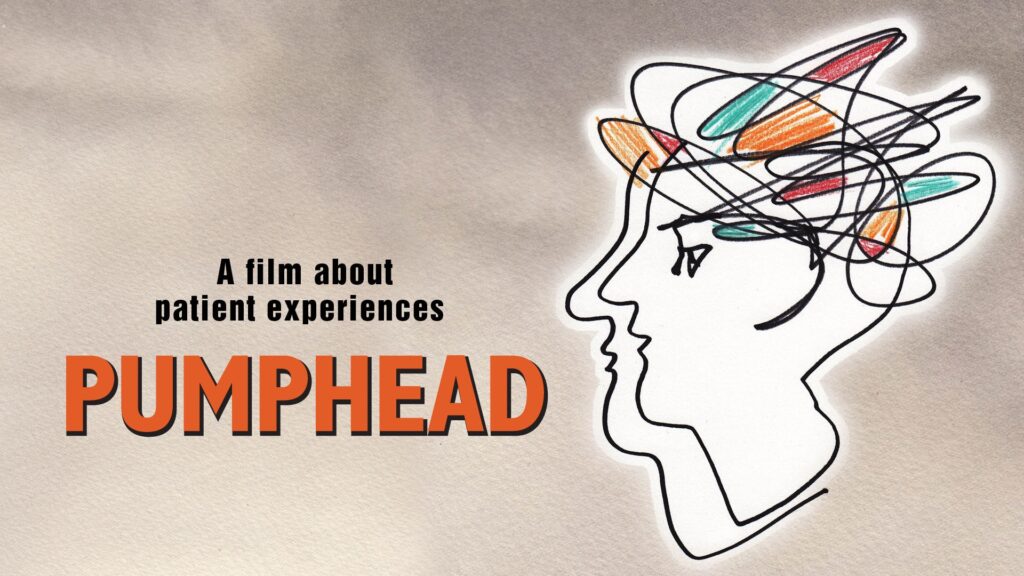
FOR FURTHER INFORMATION: https://www.roninfilms.com.au/video/858/0/13773.html
Where to Listen to Previous Episodes
Click a button below ⬇️⬇️⬇️⬇️⬇️⬇️
 |
 |
 |
 |
 |
 |